Looking for room to spread out without feeling cut off from the Oklahoma City area? Arcadia gives you a rare mix of rural space, Route 66 character, and access to metro jobs and services. If you are thinking about buying acreage or a country home here, the details behind the land matter just as much as the views. Let’s dive in.
Why Arcadia attracts acreage buyers
Arcadia is a very small town with a strong rural identity. The town lists a population of 279 and a total area of 1 square mile, and it describes itself as a peaceful rural community about 15 miles north of Oklahoma City on Historic Route 66 and 6 miles east of I-35.
For many buyers, that location is the draw. You can enjoy more privacy and elbow room while still keeping a practical commute to the metro. That balance is a big reason Arcadia stands out for country-lifestyle buyers.
The area also offers nearby recreation and well-known local landmarks. Arcadia highlights the Round Barn, POPS, the Washington Irving Monument, and Lake Arcadia, which is about 1.5 miles west of town on Route 66.
What to expect from country properties
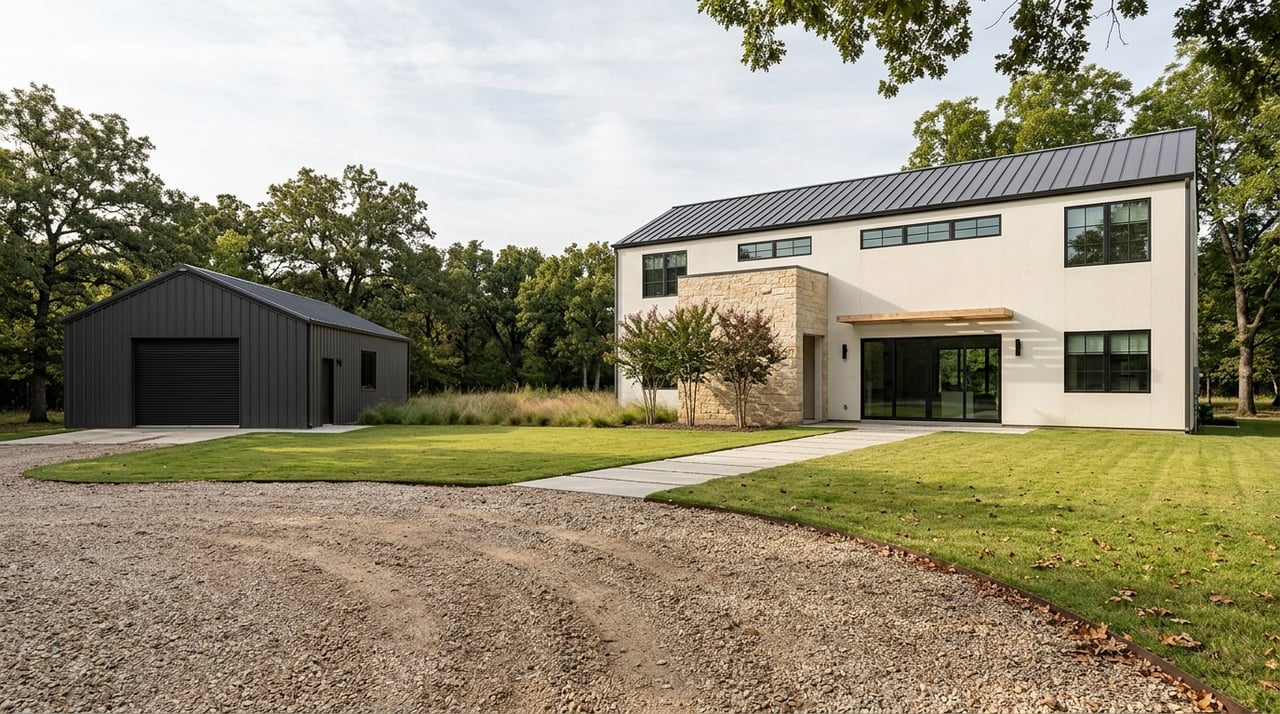
In Arcadia, acreage can mean different things. You may find true multi-acre homesites, large-lot residential properties, or parcels where access and utility questions are a major part of the buying decision.
That is important because country homes do not always work like homes in a typical subdivision. A property may look ideal on paper, but the real value often depends on road access, available utilities, land use, and whether the property fits standard financing guidelines.
Check access before you fall in love
Access is one of the first things to confirm on any acreage purchase. For many loan scenarios, a property needs to be readily accessible by roads that meet local standards.
That means you should look beyond the listing photos. Ask whether the road is public or private, whether any easements affect access, and whether the route to the home is clearly documented.
On acreage, road frontage and legal access can affect both financing and long-term usability. If access is unclear, it can create delays, extra costs, or a smaller future buyer pool.
Understand utilities and monthly costs
Utilities are another major piece of the puzzle. Inside Arcadia town limits, the Public Works Department says it partners with Edmond for water supply and wastewater treatment, while the town maintains water lines to the customer’s meter and wastewater mains.
The town also states that natural gas is supplied by ONG, electric service by OG&E, and garbage service by Eastside Waste Management. Residents receive a monthly billing statement for water, sewer, and garbage from the Public Works Department.
Arcadia’s posted utility schedule shows that service setup and ongoing costs can add up. The current schedule lists a $50 connection or utility deposit, a $35 monthly water base fee for the first 1,000 gallons, and a $35.20 monthly sewer base fee for the first 2,000 gallons.
For buyers looking at new construction or undeveloped land, one-time utility costs matter even more. The same schedule lists a 5/8-inch water meter installation cost of $670, a water impact fee of $1,980 for a single short service or $3,410 for a single long service, and a sewer capacity fee of $715.
If service is not already accessible, the economics can change quickly. Arcadia’s ordinance says the developer or builder is financially responsible for water and sewer installation where service is not accessible.
Utility questions to ask early
- Is the property inside Arcadia town limits?
- Is it already connected to municipal water and sewer?
- If not, does it use a private well and septic system?
- Are utility lines already at the road?
- What connection, meter, impact, or capacity fees may apply?
Septic, permits, and buildability matter
If you plan to build, expand, or remodel, do not assume the land will automatically support your plans. Arcadia’s building permit form states that building activity is prohibited until a written permit is issued.
The same local materials say licensed professionals are required for electrical, plumbing, and HVAC work, and periodic inspections take place during construction. That makes permit history and future permit requirements an important part of your due diligence.
For properties without accessible sanitary sewer service, septic may be possible. Arcadia’s development ordinance says septic tanks or other unit disposal systems may be used if sanitary sewer is not reasonably accessible, but the residential lot must be at least 15,000 square feet, the system must be at least 20 feet from the lot line, and the installation must comply with state, county, and Oklahoma DEQ requirements.
Oklahoma DEQ states that rural homes and businesses commonly use on-site wastewater systems and that the first step in designing or selecting a system is a soil test. DEQ also provides services such as soil profiles, final inspections, well evaluations, existing system inspections, and permits or authorizations to construct.
Why soil and septic review matter
A beautiful parcel is not always a simple build site. Before you count on adding a shop, guest house, or new home, confirm whether the site supports the type of wastewater system required.
On country properties, buildability is not just about size. It is also about the soil, setbacks, utility access, and local approval requirements.
Review zoning and land use closely
Zoning can shape what you can do with a property after closing. Arcadia’s code lists R-1 single-family and R-2 multifamily residential districts, notes that an agricultural zone south of Highway 66 is grandfathered on the current zoning map, and includes a restricted area with defined boundaries near Highway 66 and Main Street.
The town’s code also shows that some residential areas have minimum square-footage and setback rules. So if you are considering horses, a hobby farm setup, future additions, or a different residential use, it is smart to verify zoning and any grandfathered use rights before you move forward.
This is one of the biggest differences between buying acreage and buying in a newer neighborhood. More land can create more opportunity, but only if the property’s legal use matches your plans.
Financing can depend on the property type
Financing a country property is often more nuanced than financing a typical house in town. The key issue is not just acreage. It is whether the property fits the rules of the loan program you want to use.
USDA’s Section 502 Guaranteed Loan Program can be especially relevant for rural buyers. USDA says the program offers 100% financing in eligible rural areas for qualifying borrowers, requires income at or below 115% of area median income, allows purchase of a site with a new or existing dwelling with no set acreage limits, and is available only as a 30-year fixed-rate loan.
USDA also states that closing costs and reasonable customary expenses may be included, and site-preparation costs such as grading, fences, and driveways can be financed. However, eligibility is address-specific, the home must be used as a primary residence, and it cannot be an income-producing property.
Other properties may fit fewer conventional options. Fannie Mae states that it does not purchase or securitize mortgages on vacant land, land-development properties, or agricultural properties such as farms or ranches, and it requires roads and utilities that meet local and community standards.
In practical terms, that means a country home with existing residential improvements and clear utility access may fit more financing paths than raw land or property with a more agricultural use profile. If you are comparing several acreage options, financing fit should be part of the discussion from the start.
Use county records in your research
County records can help you move past marketing language and into the facts. The Oklahoma County Assessor’s public access system provides sale price, market value, assessed value, and legal description.
That information is useful when you are comparing listing price to county-record data. It can also help you review parcel history before making an offer.
One detail matters a lot on acreage: the county assessor states that its map data is not a legal survey and directs buyers to the deed for the definitive legal description. In other words, do not rely on a map image alone when parcel boundaries really matter.
Smart due diligence for acreage buyers
- Confirm the legal description in the deed and parcel record
- Review sale history, market value, and assessed value
- Check for possible flood information in county records
- Verify whether access is public or private
- Review easements that may affect use or entry
- If building is planned, verify flood-prone status early
Lifestyle perks near Arcadia
Buying in Arcadia is not only about land. It is also about the lifestyle that comes with it.
The town’s attractions page highlights several local draws, including the Round Barn, POPS, and other Route 66 landmarks. For many buyers, those local features add personality and a sense of place that is hard to duplicate.
Lake Arcadia is another major benefit nearby. Edmond says Arcadia Lake offers picnicking, camping, swimming, water skiing, boating, disc golf, hiking, biking, equestrian trails, and year-round fishing.
Edmond also lists the lake at 1,820 surface acres with 26 miles of shoreline. For buyers who want outdoor access close to home, that is a meaningful advantage.
How to buy smarter in Arcadia
If you are shopping for acreage or a country home in Arcadia, try to evaluate each property in two ways at once. First, look at the lifestyle fit, including privacy, commute, recreation, and the overall feel of the property.
Second, look at the infrastructure fit. Access, water, sewer or septic, zoning, permit history, and financing options can all affect whether a property is truly a good purchase.
That is where local guidance can make a real difference. On unique properties, small details can change the timeline, budget, and even whether a deal makes sense at all.
If you are considering acreage or a country home in Arcadia, a careful, property-specific strategy can help you avoid surprises and buy with confidence. For tailored guidance on Arcadia land and lifestyle properties, schedule a complimentary consultation with Matthew Simms.
FAQs
What makes Arcadia, Oklahoma appealing for acreage buyers?
- Arcadia offers a rural setting, access to Historic Route 66, proximity to Lake Arcadia, and a location about 15 miles north of Oklahoma City and 6 miles east of I-35.
What utility costs should buyers expect in Arcadia?
- Arcadia posts utility fees that include a $50 connection or utility deposit, a $35 monthly water base fee, a $35.20 monthly sewer base fee, and certain meter, impact, and capacity fees that may apply to new service.
What should buyers know about septic systems in Arcadia?
- If sanitary sewer is not reasonably accessible, Arcadia allows septic or other unit disposal systems in certain cases, with lot-size, setback, and regulatory requirements, and Oklahoma DEQ says a soil test is the first step in system design or selection.
What zoning issues matter when buying acreage in Arcadia?
- Buyers should verify the property’s zoning district, any setback or minimum size rules, and whether any grandfathered use rights apply before assuming the land can support future plans.
What financing options may work for country homes in Arcadia?
- USDA’s Section 502 Guaranteed Loan Program may be an option for eligible rural properties and borrowers, while some raw land and agricultural-style properties may not fit standard conventional guidelines.
What records should buyers review before purchasing acreage in Arcadia?
- Buyers should review the deed’s legal description, county parcel records, sale history, assessed and market value data, possible flood information, and any access or easement details tied to the property.