Are you looking at duplexes, triplexes, or other small multifamily properties in Oklahoma City and wondering how to invest with more confidence? You are not alone. For many investors, the challenge is not finding interest in the asset class, but knowing how to evaluate location, zoning, tenant demand, and financing in a way that fits the local market. This guide walks you through practical small multifamily investing strategies in Oklahoma City so you can make sharper decisions and avoid common missteps. Let’s dive in.
Why Oklahoma City Draws Multifamily Investors
Oklahoma City offers a large and active renter base. The city’s 2024 population estimate was 712,919, with 280,065 households, and about 41% of housing is renter-occupied based on the owner-occupied rate of 58.6%. Median gross rent was $1,130, and average household size was 2.45.
Those numbers matter because they suggest steady demand for practical rental housing. In many cases, efficient one-bedroom to three-bedroom layouts may line up better with local household patterns than oversized units. For investors, that can shape both acquisition strategy and renovation choices.
The local economy also supports rental demand with a broad employment base. As of April 2026, the Oklahoma City area had about 704,800 total nonfarm jobs, with large employment sectors in government, education and health services, and trade, transportation, and utilities. A diversified job market can help support renter demand across different parts of the metro.
Start With the Right Property Type
In Oklahoma City, small multifamily can mean different things depending on the conversation. Some investors use the term broadly for duplexes, triplexes, and fourplexes, while institutional and lending definitions may start small multifamily at 5 to 50 units.
That distinction is important because financing can change as unit count rises. Fannie Mae identifies small multifamily as 5 to 50 units, and business-purpose credit rules can also affect how rental property financing is structured, especially for non-owner-occupied properties and properties with more than two housing units. In plain terms, a duplex and a larger multifamily building may both be income properties, but the financing path may not look the same.
If you are comparing opportunities, it helps to separate them into simple buckets:
- Duplexes and triplexes for lower entry points and simpler management
- Fourplexes and similar small rentals for added income potential with moderate complexity
- Five-plus-unit properties for investors ready for more commercial-style analysis
Use Return Metrics That Matter
A good small multifamily strategy starts with clear math. One of the most common tools is the cap rate, which uses annual net income divided by the capitalization rate to estimate value or compare properties on a common basis.
Cap rate can be useful when you are screening deals quickly. It gives you a way to compare one property’s income performance to another without getting lost in surface details like finishes or listing language.
You should also pay attention to cash flow to equity. HUD describes this as the net income remaining after annual mortgage payments. That is the portion of the deal that may matter most if your goal is monthly income after debt service.
Another key measure is DSCR, or debt service coverage ratio. Fannie Mae defines DSCR as net cash flow divided by principal, interest, and certain required payments. In practical terms, DSCR helps show whether a property’s income can support its debt obligations.
Screen Neighborhoods With Tenant Demand in Mind
Not every affordable property is a smart investment. In Oklahoma City, neighborhood screening should be grounded in what local residents say matters most in housing decisions.
According to the city’s 2021 Housing Market Study, residents place high importance on safety and security, price, construction quality, neighborhood character, grocery access, and proximity to dining, shops, transit, and schools. That gives you a useful framework for narrowing down submarkets.
When you assess a property, consider how it performs on everyday convenience. A unit near shopping, dining, or transit may appeal to renters who value shorter drives and easier daily routines. A property that offers solid construction quality and practical layouts may also stand out in a competitive rental market.
The same housing study found that 71% of all housing units are within a half-mile of a school and 53% are within a half-mile of a transit stop. That does not mean every investment should target those locations, but it does suggest that access and convenience can be meaningful filters when you compare neighborhoods.
Watch the Middle-Density Opportunity
Small multifamily is not just a niche play in Oklahoma City. The city’s housing study found that recent development showed alignment with duplex and triplex preferences, and it also identified potential unmet demand for townhomes.
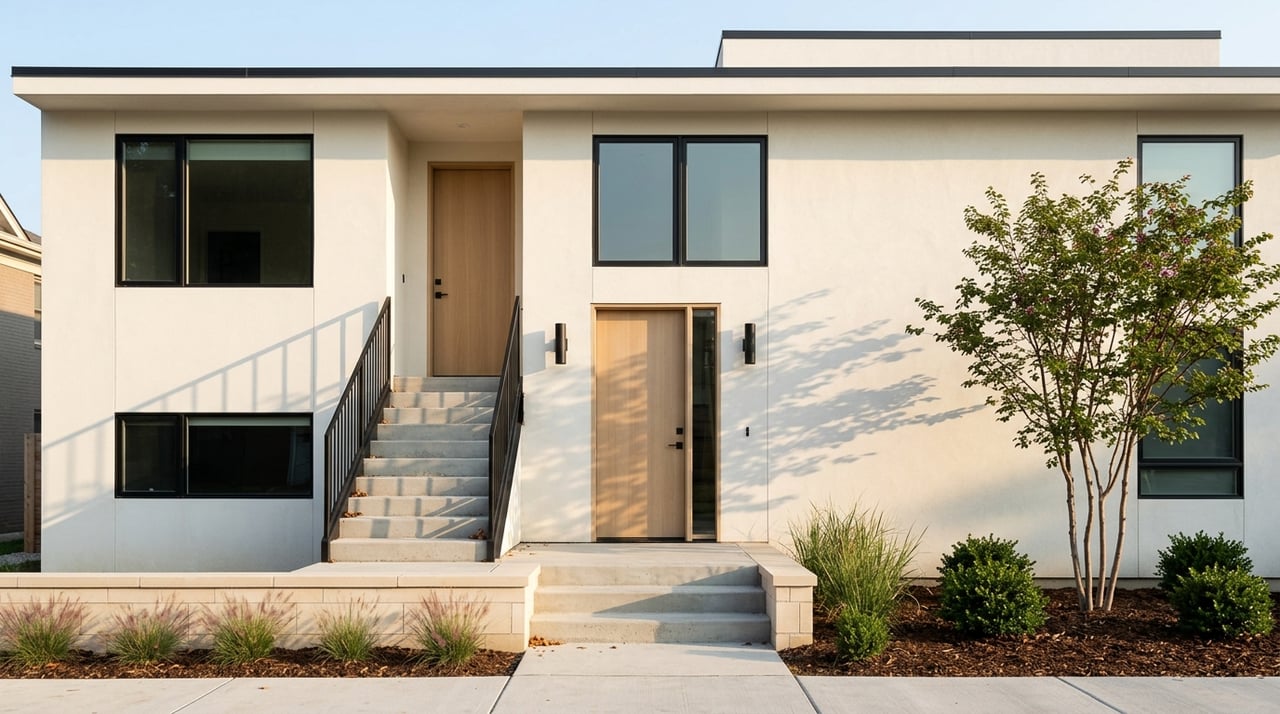
That points to an important strategic idea. If you are looking for growth areas within smaller-scale income property, middle-density housing may deserve a closer look. Duplexes, triplexes, and townhome-style properties can fit between single-family homes and large apartment communities, which may appeal to renters who want something more practical and neighborhood-oriented.
For investors, this can create options across both existing inventory and redevelopment opportunities. It also reinforces the value of looking beyond the basic “price per door” mindset and focusing on how a property fits the local housing mix.
Check Zoning Before You Check Projections
One of the most important investing strategies in Oklahoma City is also one of the simplest: check zoning first. The city uses a map-based zoning system under Chapter 59, and all land within the city is classified into zoning districts. Some areas also require design approval.
That means site selection should begin with permitted use, not just rent estimates or renovation ideas. A property may look attractive on paper, but if the zoning does not support your intended use, your plan can unravel quickly.
Oklahoma City’s code update materials also show where small multifamily fits physically within the city. In Urban Medium areas, which are mostly pre-1930s parts of the city focused on infill, rehabilitation, and redevelopment, R-2 and R-3 are listed as duplex and triplex zones, while R-4 covers multiple units.
Urban Low areas also include R-2 and R-3 for duplexes and triplexes, with R-4 for multiple units, but they apply to less intensive urban-served areas. For investors, this is a reminder that property type, neighborhood form, and zoning framework all need to work together.
Match Your Strategy to the Area
Once zoning is confirmed, your next step is matching the investment plan to the subarea. Infill-oriented areas may present different opportunities than less intensive urban-served sections of the city.
For example, a duplex or triplex in an older urban area may offer potential through renovation, repositioning, or improved operations. In a less intensive area, a cleaner play may be stable occupancy with practical upgrades and careful tenant targeting.
The point is not to force the same formula everywhere. The better strategy is to let the property, zoning, and local demand profile guide the business plan.
Build for Digital Leasing Reality
Oklahoma City households are highly connected online. Census data shows that 92.0% of households have broadband and 96.3% have a computer. For rental owners, that makes digital marketing and leasing workflows especially relevant.
If you need to fill vacancies, your listing quality, photography, pricing presentation, and online distribution can have a direct impact on visibility. Digital-first renters often expect clear photos, straightforward details, and an easy inquiry process.
This is one area where local representation can add value. A broker who understands neighborhood positioning, zoning fit, and market-specific messaging can help you present the property more effectively to both buyers and tenants.
A Simple Oklahoma City Deal Checklist
Before you move forward on a small multifamily property, use a checklist that reflects local realities:
- Confirm the property’s zoning and permitted use
- Identify whether the asset is best positioned as a duplex, triplex, or larger multifamily play
- Review rent potential in the context of layout efficiency and neighborhood convenience
- Compare return measures such as cap rate, cash flow to equity, and DSCR
- Evaluate proximity to daily needs like grocery options, shops, dining, transit, and schools
- Consider whether the area supports infill, rehabilitation, redevelopment, or stable hold income
- Plan for digital marketing and leasing from the start
A disciplined checklist can help you avoid emotional decisions and keep your focus on income, risk, and fit.
Why Local Guidance Matters
Small multifamily investing in Oklahoma City is local by nature. Zoning is local. Neighborhood demand drivers are local. Even the best-looking spreadsheet still depends on whether the property fits the block, the submarket, and the renter profile.
That is why many investors benefit from working with a broker who understands both the numbers and the neighborhood context. The right guidance can help you identify opportunities, filter out weak fits, and market the property effectively once you close.
If you are exploring duplexes, triplexes, or other investment opportunities in Oklahoma City, a founder-led brokerage with neighborhood knowledge and modern digital reach can help you approach the process with more clarity. To talk through your goals and evaluate the right strategy, schedule a complimentary consultation with Matthew Simms.
FAQs
What counts as small multifamily in Oklahoma City investing?
- In everyday use, many people include duplexes and triplexes, but financing and industry definitions can differ, especially as unit counts move into 5 to 50 units.
What metrics matter for Oklahoma City multifamily deals?
- Common metrics include cap rate for comparing income performance, cash flow to equity for post-debt income, and DSCR for measuring how well income covers debt obligations.
What neighborhood factors matter for Oklahoma City renters?
- The city’s housing study highlights factors such as price, construction quality, neighborhood character, grocery access, and proximity to dining, shops, transit, and schools.
What zoning should you check for Oklahoma City duplexes and triplexes?
- Oklahoma City uses a map-based zoning system, and city materials identify R-2 and R-3 with duplex and triplex uses, while R-4 applies to multiple units in certain local area frameworks.
Why does digital marketing matter for Oklahoma City rentals?
- Because most local households have broadband and computer access, strong online listing presentation and digital leasing workflows can play a major role in attracting renters.