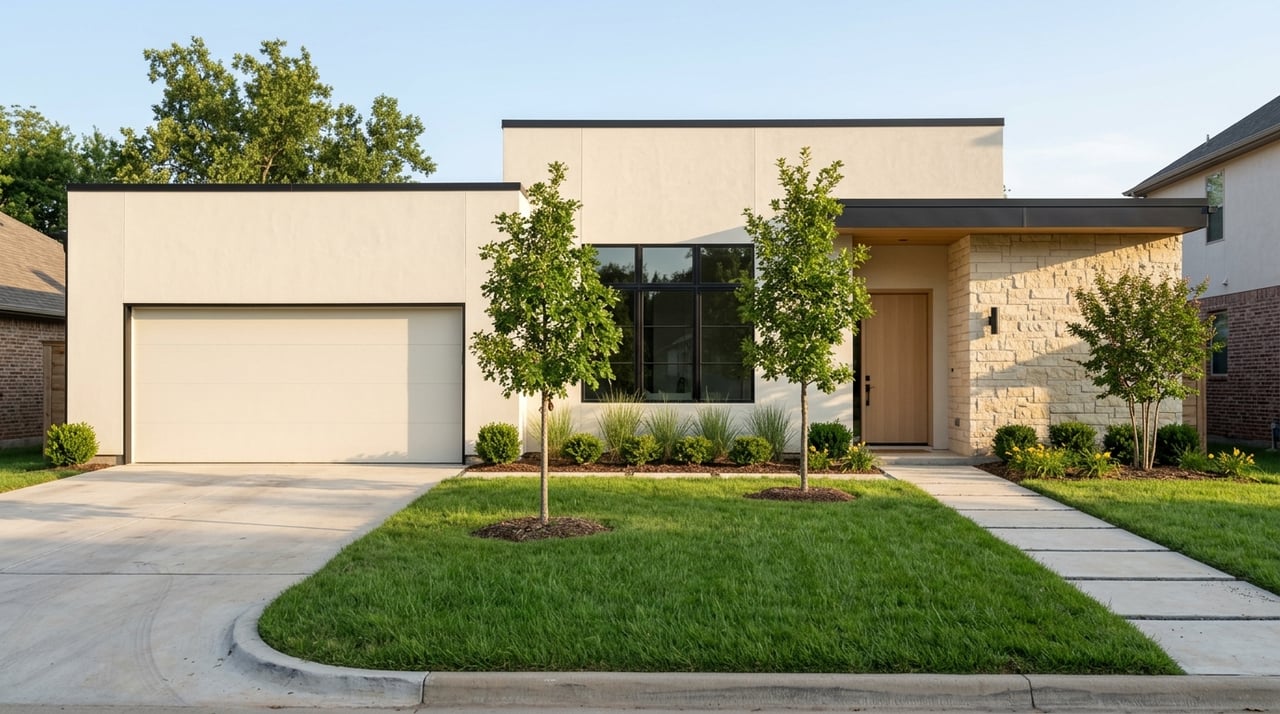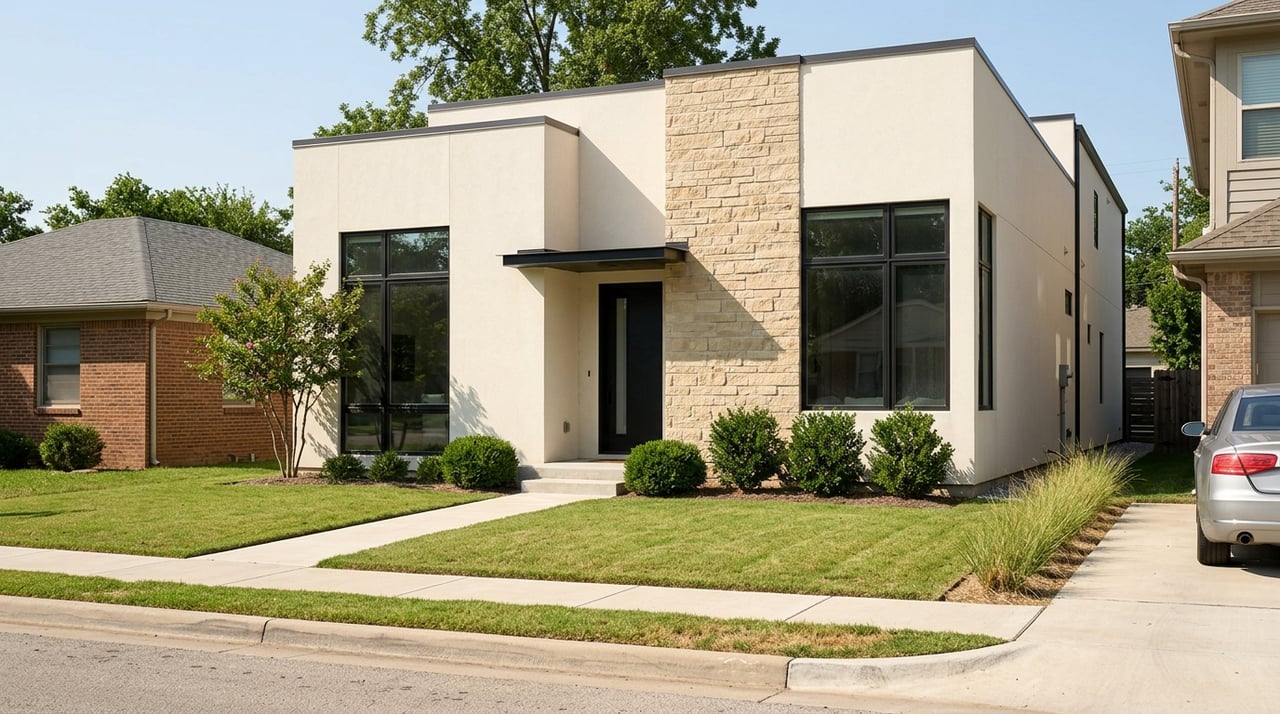
Buying a modern infill home in Oklahoma City can feel exciting and a little tricky at the same time. You may love the design, the central location, and the character of an established area, but you also want to know what you are really buying before you close. This guide will help you understand how infill works in OKC, what makes these homes different, and what to check so you can move forward with confidence. Let’s dive in.
What infill means in Oklahoma City
In Oklahoma City, infill generally means new construction or redevelopment inside established neighborhoods instead of building out at the edge of the metro. The city’s long-range planning and subdivision regulations support infill in existing neighborhoods and nonresidential areas where public facilities are already available.
That matters because a modern infill home is usually shaped by its surrounding block, lot, and local rules in a way that a newer subdivision home may not be. In many cases, you are buying into a built environment that has evolved over decades, not a master-planned tract with one standard pattern.
Why modern infill appeals to buyers
The biggest draw is location. Many infill homes put you closer to daily destinations, entertainment, parks, and established commercial areas than you might find in a more outward-growing part of the metro.
Oklahoma City’s planning framework for Urban Medium areas also emphasizes access to retail, services, parks, and transportation options. The Oklahoma City Streetcar connects downtown, Bricktown, Midtown, and Automobile Alley, and it passes destinations like Scissortail Park, the convention center, and Paycom Center.
For many buyers, that centrality changes daily life in a practical way. You may spend less time driving, have easier access to city amenities, and enjoy a more connected urban setting.
How infill homes differ from subdivision homes
Modern infill homes in central OKC often sit on smaller lots than homes in newer suburban subdivisions. In many Urban Medium areas, the city describes a pattern of smaller lots and a wider mix of home types, especially in older parts of the city that were largely built before the 1930s.
The city’s summary for Urban Medium areas lists minimum lot sizes that can range from 6,000 square feet in some R-1 areas to as little as 1,250 to 5,000 square feet in some R-4 areas. It also lists front-yard minimums of 25 feet, rear-yard minimums of 10 to 15 feet, and a 35-foot residential height maximum.
What does that mean for you as a buyer? You should expect tighter setbacks, less yard area, and more variety from one property to the next. You may also see single homes, duplex-style forms, accessory dwellings in some cases, and clustered housing near certain commercial edges.
The tradeoffs to understand
A modern infill home can offer real lifestyle benefits, but it usually comes with tradeoffs. You may gain better access to urban amenities and a more central address, while giving up larger yards, more space between homes, and sometimes easier parking.
That is why the block matters almost as much as the house itself. A great floor plan can still feel different depending on alley access, nearby commercial activity, parking patterns, and how neighboring parcels may develop over time.
Check zoning before you fall in love
Before closing on an infill property, make sure the parcel supports what is already built and what you expect to do with it. Oklahoma City provides zoning map tools and address-based zoning lookups, and the city’s Subdivision & Zoning staff handle matters such as rezoning, planned unit development cases, lot splits, deed approval, and street or alley closures.
This step is especially important with infill because unusual lots, corner parcels, and redevelopment sites often come with more variables than a standard subdivision lot. If you are buying a home with a detached structure, unusual site layout, or redevelopment potential nearby, zoning context can affect both your use and future value.
What to confirm on zoning
- The base zoning matches the existing home form
- Any overlay district applies to the property as expected
- Lot configuration appears consistent with the current parcel setup
- Street or alley conditions do not create an unexpected limitation
- Any planned changes you care about would need separate review or approval
Review design districts and historic rules
Many central Oklahoma City neighborhoods include design-review districts or historic preservation districts. These areas can shape what owners may change, what new construction looks like, and how long approvals take.
Oklahoma City says Urban Design Overlay Districts include the Asian District, Paseo, the Plaza District, Capitol Hill, the Lincoln Boulevard Corridor, and properties along Uptown NW 23rd Street. Downtown and Bricktown have their own review rules, and several historic preservation districts also require additional review for changes and new construction.
If a property sits in one of these areas, design review is not a minor detail. It can affect exterior changes, additions, demolition, and new construction, so it is worth understanding before you buy.
Why design review matters
The city recommends applying for a Certificate of Approval before seeking a building permit when design review applies. Oklahoma City also notes that review can take weeks or months, and even approved projects have a mandatory 10-business-day appeal period before a permit is issued.
If you are buying a modern infill home because you plan to personalize it quickly, this timeline matters. The right house for you may be one that already fits your needs rather than one that depends on a fast exterior redesign.
Verify the permit history
With a newer or recently remodeled infill home, the permit trail is one of your best tools. Oklahoma City requires permits when a structure is built, altered, moved, enlarged, or demolished, and the city’s adopted codes include the 2018 International Residential Code along with related trade codes.
The city also states that electrical, plumbing, and mechanical work must be completed by contractors licensed in Oklahoma and registered with the city. Permit searches by address and inspection request tools are available through the city.
Permit checks worth making
- Confirm permits were issued for new construction or major remodel work
- Review whether inspections were completed
- Look for consistency between visible improvements and city records
- Pay special attention to electrical, plumbing, and mechanical updates
A clean permit history does not replace inspections, but it can help you spot gaps early. That can be especially useful with infill properties that have been rebuilt, expanded, or heavily updated.
Don’t skip floodplain review
Floodplain status should be part of your due diligence for any infill purchase in OKC. Oklahoma City states that all development within a floodplain requires a permit, and new construction plus substantial improvements must be at least one foot above base flood elevation.
The city also notes that standard homeowners insurance does not cover flood damage. It provides FEMA flood maps and encourages flood insurance for property within or adjacent to a floodplain.
For buyers, this is not just a paperwork issue. Floodplain conditions can affect insurance decisions, future improvements, and your comfort level with the property over the long term.
Evaluate the lot and block together
Infill value is highly specific to the immediate surroundings. Two homes with similar finishes can feel very different if one has alley access, one backs to a commercial use, or one sits in a district with stricter design controls.
As you compare homes, look at the broader physical context, not just the kitchen and primary suite. In central OKC, the lot, the block, and the surrounding land-use pattern can influence convenience, privacy, parking, and future resale appeal.
Block-level questions to ask
- How close are neighboring homes and structures?
- Is there alley access?
- Are nearby parcels residential, mixed-use, or close to commercial activity?
- Is the property in a design-review or historic district?
- Does the street feel consistent, or is it changing quickly through redevelopment?
A smart checklist before closing
If you are serious about buying a modern infill home in Oklahoma City, it helps to evaluate the property as a full package. The floor plan is important, but it should be weighed alongside city rules, lot conditions, and the surrounding block.
Here is a practical checklist to guide your decision:
- Confirm the base zoning and any overlay district
- Check whether the property falls in a design-review or historic district
- Review permit history for new construction or remodel work
- Verify inspection records where available
- Review floodplain status and insurance considerations
- Assess lot size, setbacks, and parking realities
- Study the surrounding block, including alley access and nearby land uses
Why local guidance helps with infill purchases
Modern infill homes can be some of the most appealing properties in Oklahoma City, but they ask more of a buyer than a typical subdivision purchase. The details are often more layered, and the right decision usually comes from looking beyond finishes and square footage.
When you understand zoning, design review, permit history, floodplain status, and block context, you can buy with clearer expectations. That kind of preparation helps you protect both your lifestyle and your investment.
If you are considering a modern infill home in Oklahoma City and want a thoughtful, local perspective on the lot, the block, and the bigger picture, Matthew Simms can help you evaluate your options with the personalized attention of a boutique brokerage.
FAQs
What is a modern infill home in Oklahoma City?
- A modern infill home is typically new construction or redevelopment built within an established Oklahoma City neighborhood rather than on the outer edge of the metro.
Why are Oklahoma City infill lots often smaller?
- Many central OKC areas follow older urban development patterns, and the city’s Urban Medium guidance shows smaller lot sizes and tighter setbacks than typical suburban subdivisions.
What Oklahoma City property rules should you check before buying an infill home?
- You should check base zoning, overlay districts, design-review or historic-district status, permit history, and floodplain conditions before closing.
How can design-review districts affect an Oklahoma City infill purchase?
- Design-review districts can require a Certificate of Approval for certain exterior work or new construction, and the review process may take weeks or months.
Why does floodplain status matter for an Oklahoma City infill home?
- Floodplain status matters because development in a floodplain requires permits, certain elevation standards apply, and standard homeowners insurance does not cover flood damage.
What is the biggest advantage of buying an infill home in Oklahoma City?
- For many buyers, the biggest advantage is a more central location with better access to retail, services, parks, and major urban destinations.